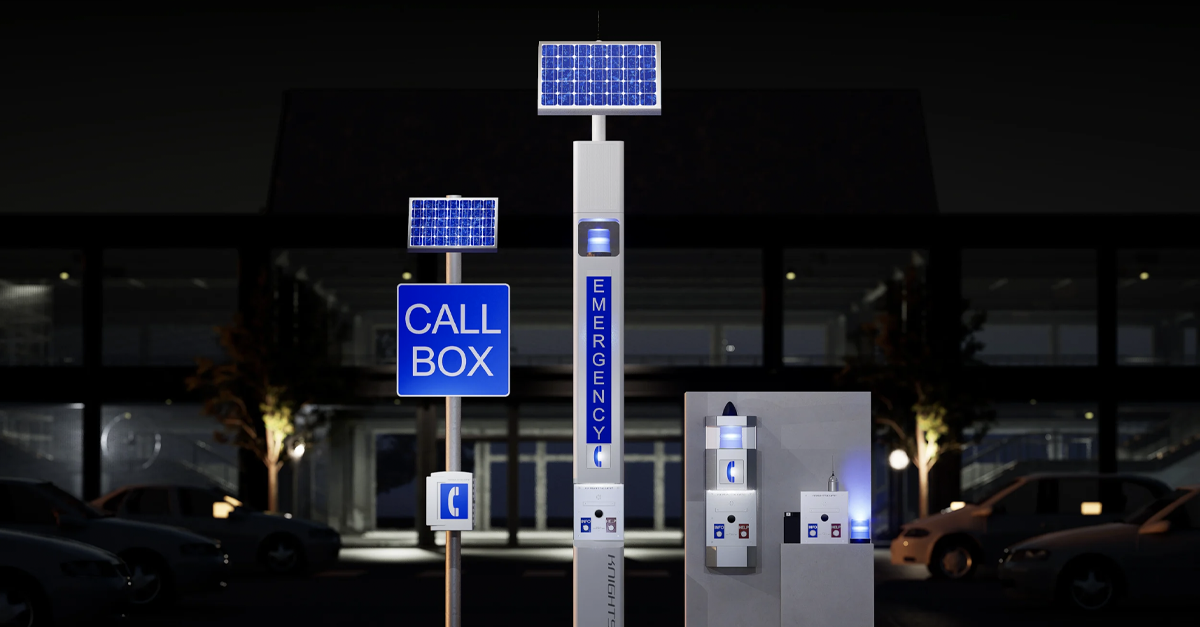
Choosing the right emergency communications products for your property isn’t about the right product – it’s about answering real operational questions that show up in the process. This involves the intuitive nature of the product design but also the maintenance, installation and overall lifespan of the technology.
Knightscope has deployed thousands of blue light towers, emergency phones, and call boxes across the nation. With this experience, coupled with product innovation and insights, we’ve compiled a list of the most commonly asked questions regarding emergency communications products and how they fit into your real-world needs.
In an emergency, no one has time to hunt for a sign, read directions, or search for a front desk. Additionally, while we all rely on cell phones for nearly any and all communication these days, in an emergency there’s a chance that an individual’s cell phone may have no signal, have a low battery, or be damaged or lost – especially in natural disasters or incidents of violence.
Furthermore, a blue light tower also signals to the people nearby that the organization has their safety in mind.
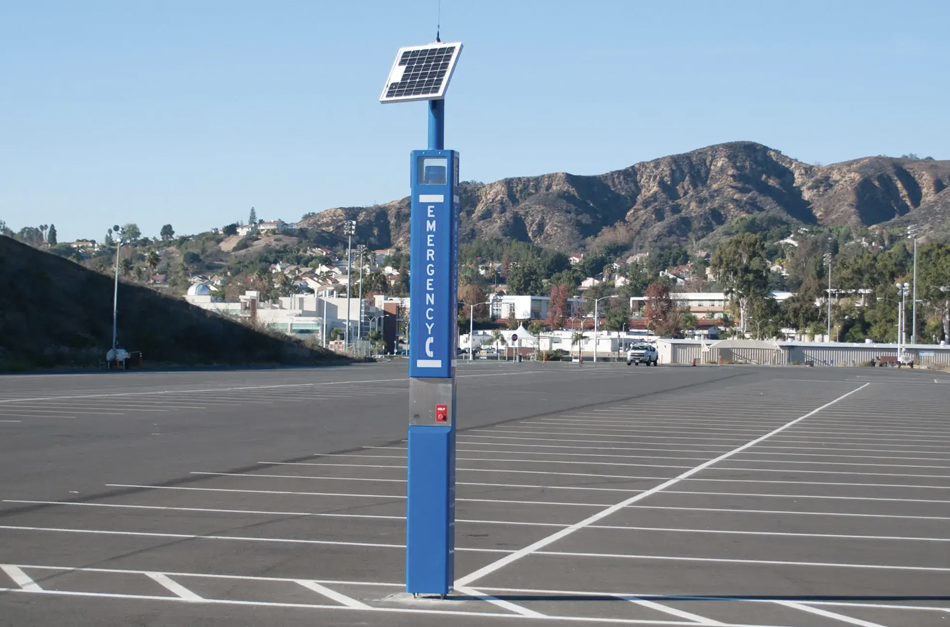
That’s exactly what the K1 Blue Light Tower is built for: a recognizable beacon with emergency phone functionality designed for 24/7/365 operation and visibility in outdoor environments. It’s ideal for campuses, parking lots, and remote walkways where “easy to find” is the whole point.
Not every location needs a full tower. For example, perhaps you’re considering a parking garage stairwell. In that area, space is tight and you need something mounted where people are always moving through the area.
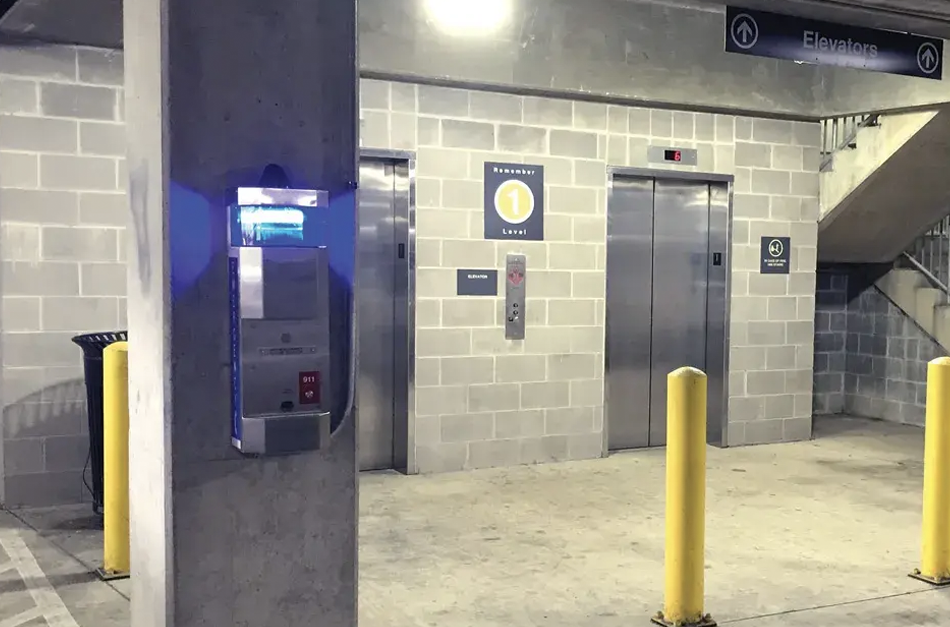
It’s not the tower that works here – it’s the emergency phone. In talking with our product specialists, their advice was simple:
“Mixing device types is usually the most cost-effective way to expand coverage. Towers work great outdoors, but wall-mounted options can cover tighter areas without overbuilding the solution.”
Noah C, Client Development Director at Knightscope
The K1 Blue Light E-Phone delivers emergency communication in a form factor designed for wall or post mounting, making it a strong option for garages, entrances, and constrained spaces.
Digital natives and non-natives alike, our smartphones have trained us to rely on intuitive interfaces and experience. When translated to emergency communications, facilities want emergency phones that work for everyone — students, employees, guests, elderly visitors, ADA-compliant visitors, people in distress — without training.
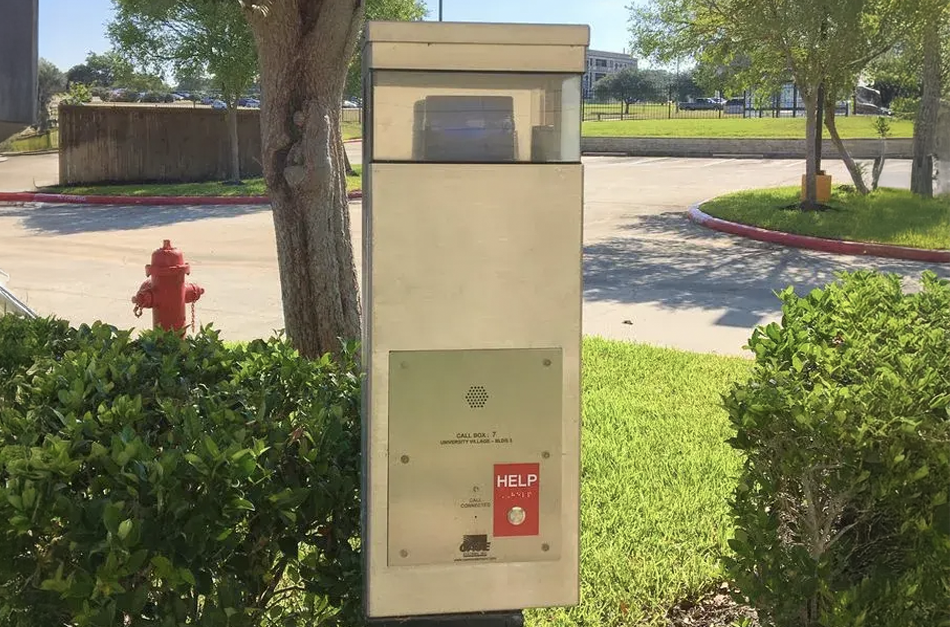
The K1 Call Box is designed for more rugged environments (like roadways, hiking trails and bridges) where people may need fast, one-touch emergency calling — a compact approach that fits where a smaller footprint makes more sense while still giving people direct access to assistance.
This is one of the most important questions to answer early, because deployment isn’t just about where emergency phones should go. It’s about what’s realistically possible based on power access and connectivity.
If you’re placing units in remote areas like walking paths, perimeter roads, overflow parking, parks, or large campuses, power or network wiring is not always readily available, or reliable.
In this case, you may consider deployment options like:
Scenarios vary by site layout, budget, and response requirements, so it’s worth reviewing your deployment plan with a product specialist before assuming you need expensive infrastructure work.
For many college campuses, hospitals or municipalities, they already have legacy emergency phones installed. However, as time goes by, the systems can become outdated, hard to service, or tied to infrastructure that doesn’t scale well anymore.
Just like the benefit mentioned in the previous question (no need to trench or dig) – a retrofit kit can make a world of difference here as well.
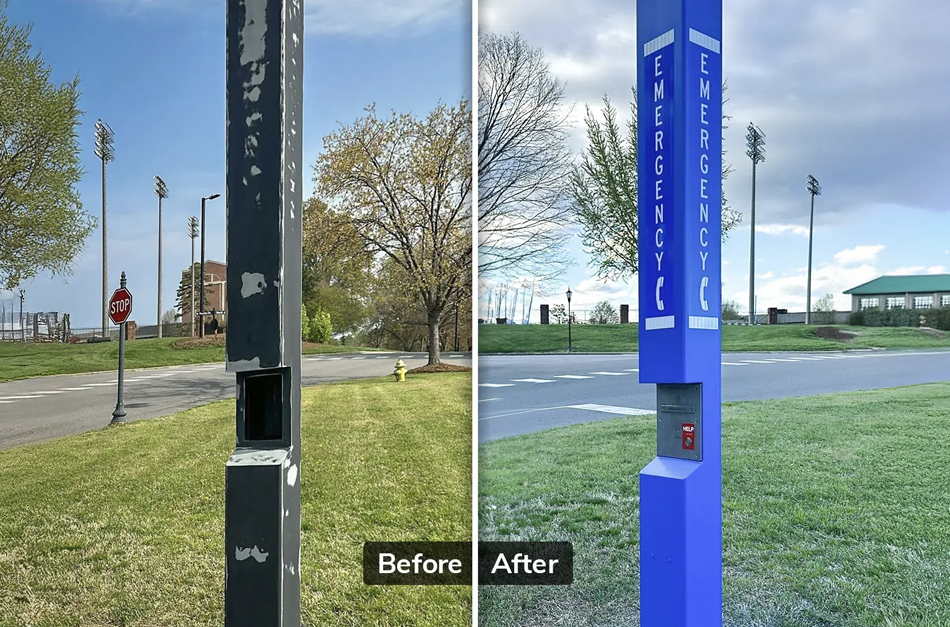
The K1 Retrofit Kit is designed to modernize existing emergency phone setups and make older stations function like Knightscope’s current emergency phone devices, including options such as cellular connectivity and self-monitoring software like KEMS.
Whether you need a high-visibility tower for outdoor areas, a wall-mounted unit for structured environments, a compact call box for targeted coverage, or a retrofit path to modernize older systems, the Knightscope K1 lineup gives facilities a practical way to upgrade safety without overcomplicating deployment.
